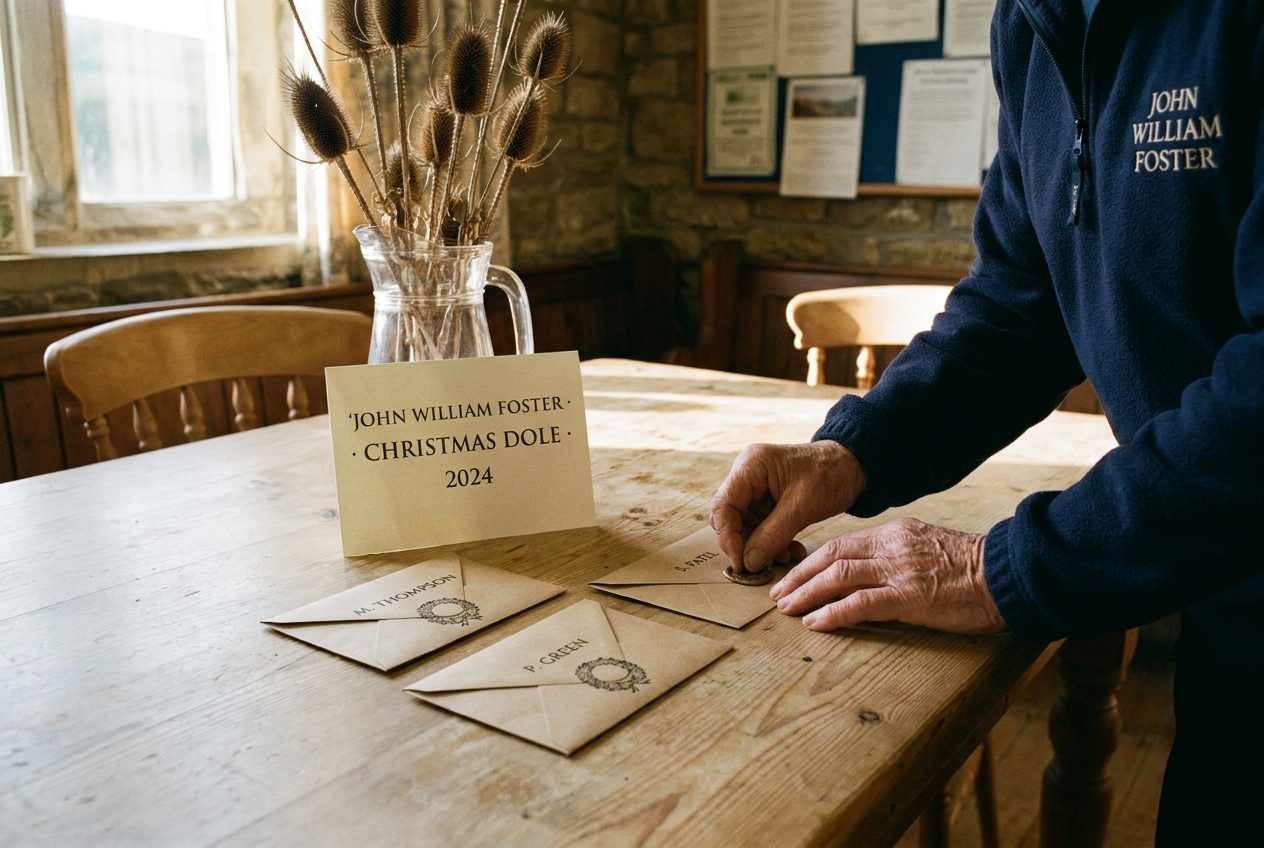
Hands of an older volunteer in a JOHN WILLIAM FOSTER navy fleece sealing a kraft envelope with a wax stamp at the back of Horton-in-Ribblesdale village hall.
Programmes

Three small doles, the whole of our work.

Below: what each distribution is, who it goes to, where it happens, what the trustees do at each stage, and who in the parish supports us in the doing of it.

A charity of our scale does not have the people, the time, or the money to run six initiatives. Nor should it. The three small distributions on this page are the whole of what we do. Each has an anchor below — the Christmas Dole, Winter Fuel Help, and Visiting Neighbours — so a recipient or a neighbour who has been told about us can read about the one that concerns them without scrolling past the others.

Across all three, the geography is the same: the parish of Horton-in-Ribblesdale, which on a quiet day you can walk end-to-end in two hours. That covers the village itself, the hamlets of Selside, High Birkwith, Brackenbottom, Studfold, and the farms scattered between them as far north as the Cam Beck and as far south as Helwith Bridge. We do not distribute outside the parish boundary, and we very rarely make exceptions.

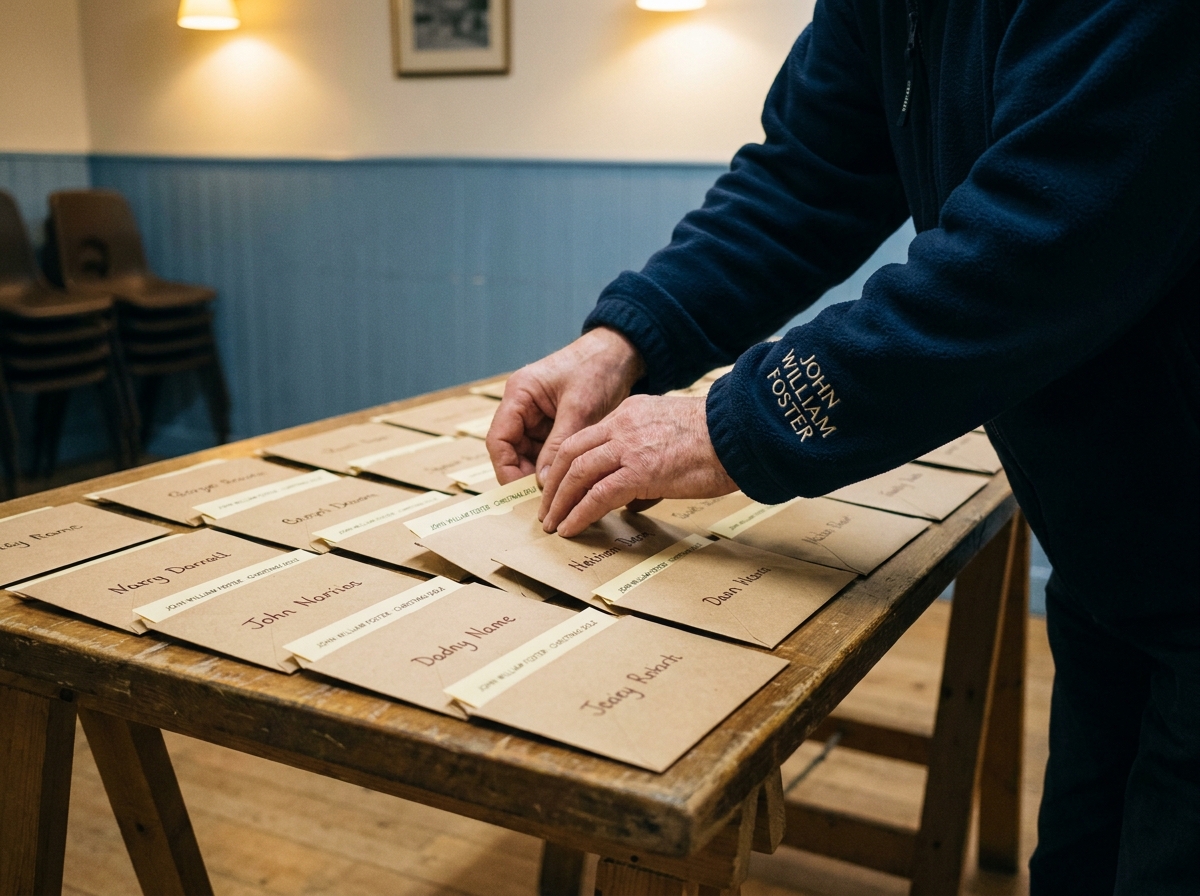
Volunteers in JOHN WILLIAM FOSTER navy fleeces filling kraft envelopes with the printed slip 'JOHN WILLIAM FOSTER · CHRISTMAS DOLE' visible inside one envelope on the pine table.
Programme · Since the founding bequest

The Christmas Dole

The main annual distribution and the heart of the charity. Envelopes are posted or walked to every qualifying widow, widower and neighbour the trustees have agreed on, in the week before Advent Sunday.

  • Who. Widows and spinsters over 60. Widowers over 80. Any neighbour of the parish the trustees know to be in real need.
  • Where. The parish of Horton-in-Ribblesdale, including the hamlets of Selside, Studfold, Brackenbottom, High Birkwith and the farms in between.
  • When. Each year in the week before Advent. Envelopes are written on the second Thursday of December at the back of the village hall.
  • How much. Small. The 2024 average was £60 per household; the largest single envelope, by trustee agreement, was £85.
  • How given. By hand where possible. Through the parish post otherwise. Always addressed by name.

Supported by · St Oswald's Church, Horton-in-Ribblesdale

Programme · Added by trustee agreement, 1980s

Winter Fuel Help

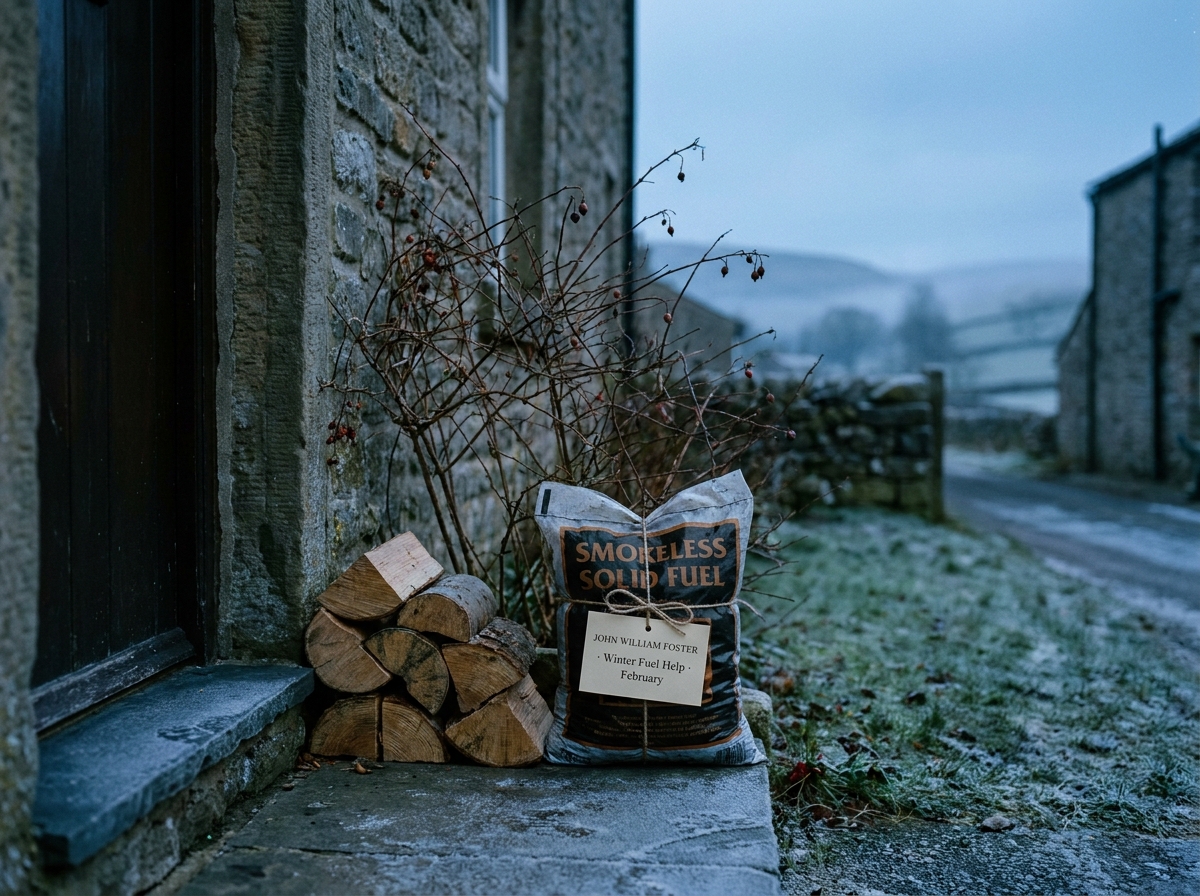
A second, smaller distribution in February — the worst of the Dales winter — sent only to those households the trustees know to be heating their homes with solid fuel or finding the cold months hardest. Often paid direct to the coal merchant rather than as a cash envelope.

  • Who. A short subset of the Christmas Dole list — households on solid fuel, or in particularly exposed cottages, or where a recipient has told us the cold months are biting.
  • Where. The same parish, with a small bias towards Selside, Studfold and the upper farms where the wind off Pen-y-ghent is hardest.
  • When. The second weekend of February. Decided at the trustees' March meeting only if any income remains.
  • How much. Typically £30–£50 per household. Sometimes paid as a delivery of coal or split logs.
  • How given. Most often by the coal merchant in Settle, on our account, with a printed slip explaining the gift.

Supported by · Settle Coal & Solid Fuel Co. (local merchant)

Stack of split logs and a bag of solid fuel beside a cottage porch, with a printed receipt tied to the bag reading 'JOHN WILLIAM FOSTER · Winter Fuel Help · February'.

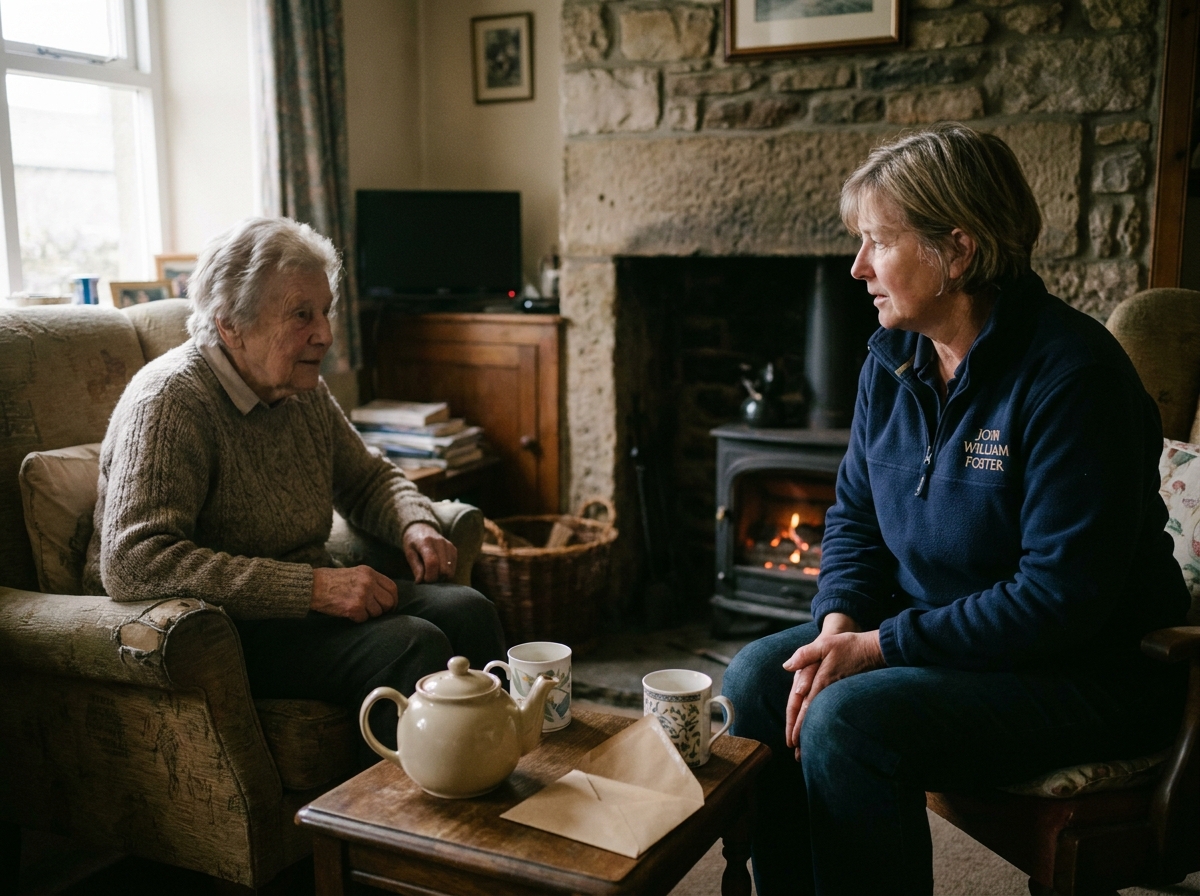
An older woman in a Horton-in-Ribblesdale farm cottage with a visiting JOHN WILLIAM FOSTER volunteer in a navy fleece, a pot of tea between them.
Programme · Always informal, recorded 2008

Visiting Neighbours

Not a grant. A small, modest rota of trustees and parish helpers who, between them, drop in on the dole's older recipients across the year — not to assess them, but to know them. The doles are written from what is heard at these kitchen tables.

  • Who. Whichever of our dole recipients welcomes a visitor. We do not visit anyone who would rather we did not.
  • Where. The parish, the parish, and only the parish.
  • When. Loosely once a quarter per household, often more often in winter, often less in summer.
  • How much. Visiting is unpaid and unfunded. The only cost is the petrol, and we usually walk.
  • How. By prior arrangement. With cake, where the trustee is the kind who bakes.

Supported by · Horton-in-Ribblesdale Parish Council

A note on what we do not run. We are not a grant-making body for community projects. We do not fund building works, public-realm improvements, or capital expenditure. The parish has other small charities and the parish council itself for those purposes; we point enquirers in their direction.

Help us keep the rota going

The dole runs on £1,038 a year and the time of seven trustees. A small gift extends both.